


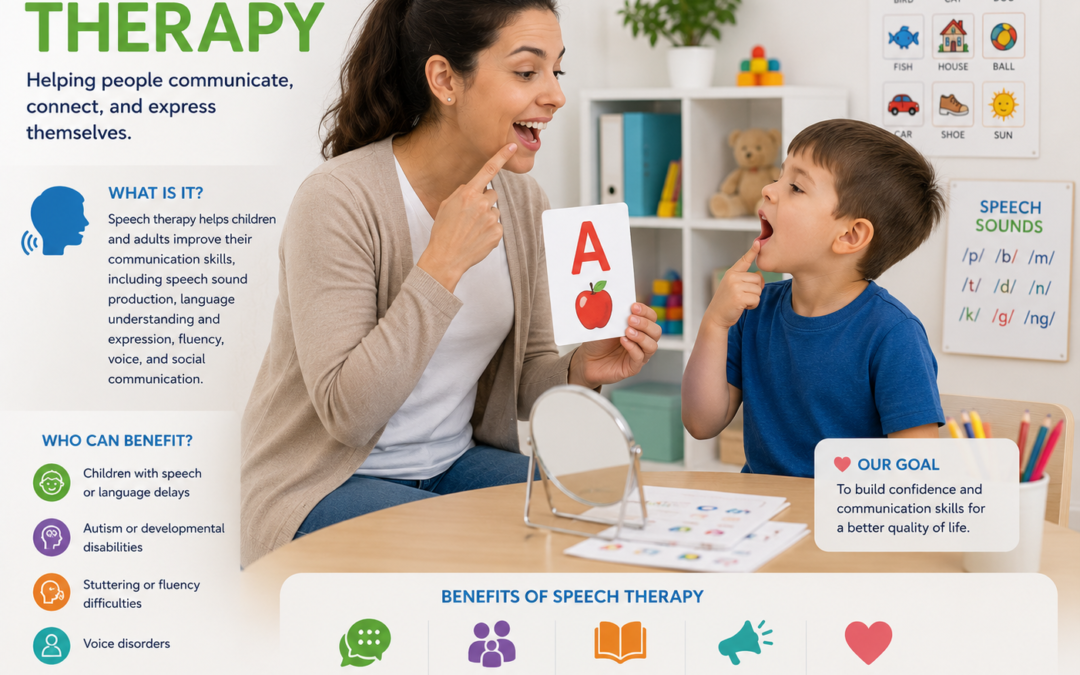
Speech Delay in Toddlers: What Every Indian Parent Needs to Know
There is a moment every parent waits for — the first time their child says “Mama” or “Papa.” It is one of the purest joys in the world. But what happens when that moment is taking longer than expected? What happens when other children the same age are already forming sentences, while your child is still silent — or saying only a handful of unclear sounds?
If you are searching “my child is not talking at 2 years” or “speech delay in toddlers” at midnight, know that you are not the first parent to do so — and you have absolutely come to the right place. Speech delay is one of the most common developmental concerns in young children, and the good news is that with early identification and the right therapy, most children make remarkable progress.
At Reforming Lives in Sector 16, Rohini, Delhi, our experienced speech therapists have helped hundreds of toddlers and children discover their voice. In this article, we will walk you through everything you need to understand about speech delay — what it is, what causes it, what signs to watch for, and exactly how professional Speech Therapy can change your child’s world.
What Is Speech Delay in Toddlers?
Speech delay simply means that a child is developing their speech and language skills more slowly than is typical for their age. It does not necessarily mean something is seriously wrong — but it does mean your child needs extra attention and support.
It is important to understand the difference between speech and language, as both are involved:
- Speech refers to the physical ability to produce sounds and words clearly
- Language refers to the ability to understand words and use them to communicate meaning
A child can have a delay in one or both. Some children understand everything you say perfectly, but struggle to produce words. Others may say words but not understand what is being said to them. Both types of delay deserve professional attention.
Speech delay exists on a spectrum — from mild delays that resolve with a little support, to more significant delays that are associated with conditions like autism, hearing loss, or developmental disorders. A professional evaluation is the only reliable way to understand what is happening with your child.
Speech Milestones — What Is Normal Development?
Before we talk about delays, let’s understand what typical speech development looks like. Every child is unique, but here are general milestones most children reach:
| Age | What Typical Speech Looks Like |
|---|---|
| 6 months | Babbles sounds like “ba,” “ma,” “da” |
| 12 months | Says 1–2 words like “mama” or “papa”; waves bye-bye |
| 18 months | Uses 10–20 words; points to ask for things |
| 24 months | Uses 50+ words; starts combining 2 words (“more milk,” “go park”) |
| 3 years | Uses 200+ words; speaks in short sentences others can understand |
| 4 years | Tells simple stories; speaks clearly enough that strangers understand |
If your child is significantly behind any of these milestones, that is a reason to seek a professional evaluation — not to panic, but to act.
Early Warning Signs of Speech Delay in Toddlers
Here are the specific signs parents and caregivers should watch for:
🔴 Signs in Babies (Under 12 Months)
- Not babbling by 6–8 months
- Not making different sounds to show happiness or upset
- Not responding to sounds around them
- Not reacting to familiar voices
🔴 Signs in Toddlers (12–24 Months)
- Not saying any words by 16 months
- Not pointing to things they want or find interesting
- Not responding to their name consistently
- Not saying two-word phrases by 24 months (like “want cookie” or “more juice”)
- Losing words they once used — this is a particularly important warning sign
- Difficulty following simple instructions like “give me the ball” or “come here”
- Preferring to grab, pull, or cry rather than using words to communicate
🔴 Signs in Children (2–4 Years)
- Speech that is very difficult to understand, even for parents
- Using the same few words repeatedly without expanding vocabulary
- Difficulty putting 3 or more words together in a sentence
- Getting very frustrated when they cannot communicate their needs
- Avoiding social interactions — not engaging with other children
- Relying heavily on pointing or pulling rather than words
A very important note: If your child used words and then stopped speaking, please seek professional help immediately. Regression in speech can be a significant developmental warning sign.
What Causes Speech Delay in Children?
Speech delay can have many causes, and parents should understand that in most cases, it is not because of anything you did or didn’t do. Some common causes include:
Medical Causes
- Hearing loss — one of the most common and frequently missed causes of speech delay. If a child cannot hear clearly, they cannot easily learn to speak
- Ear infections — frequent ear infections in early childhood can cause temporary hearing difficulties that affect speech development
- Oral motor difficulties — problems with the tongue, lips, or palate that make producing sounds physically difficult
- Tongue tie — a tight or short frenulum (the tissue under the tongue) can restrict tongue movement and affect speech
Developmental Causes
- Autism Spectrum Disorder (ASD) — speech delay is one of the most common early signs of autism
- Intellectual disability — affecting overall developmental pace including communication
- Global developmental delay — delays across multiple developmental areas including motor skills and cognitive function
- Childhood Apraxia of Speech — a neurological condition making it difficult for the brain to coordinate the movements needed for speech
Environmental and Other Factors
- Bilingual environments — children learning two languages simultaneously may mix them initially, which is entirely normal and not true delay
- Limited verbal interaction — children need to hear lots of conversation and language to develop speech; prolonged screen time as a substitute for human interaction can be a contributing factor
- Premature birth — premature babies often develop slightly later across all areas
- Family history — speech delay can sometimes run in families
How Speech Delay Affects the Whole Family
A toddler who cannot communicate their needs is a frustrated toddler. And a frustrated toddler often expresses that frustration through crying, tantrums, or aggression — not because they are naughty, but because they have no other way to say “I’m hungry,” “I’m scared,” or “I want a hug.”
For parents, this can be exhausting and heartbreaking. You watch other children at the park chattering away, and your heart aches for your child. You worry about school. You worry about friendships. You worry about whether they will ever be able to tell you how they are feeling.
Siblings may feel confused or even left out. Grandparents may offer unhelpful advice. Teachers may not know how to include a non-verbal child. The isolation families feel is very real.
But here is what we know at Reforming Lives from years of working with families in Rohini and across Delhi: the moment you begin structured therapy, the dynamic shifts. Children begin to communicate. Families begin to breathe again. The journey is worth it.
Signs Parents Should Not Wait On
Please contact a professional immediately if:
- Your child has no words at all by 16 months
- Your child is not combining two words by 2 years
- You are concerned about your child’s hearing at any age
- Your child has lost language they previously had
- Your child’s speech is understood less than 50% of the time by age 2, or less than 75% by age 3
- Your child shows no interest in communicating with people around them
Do not let relatives tell you to “wait and see.” Every month of delay without support is a month of missed learning. Act early — it makes an enormous difference.
The Power of Early Intervention for Speech Delay
The brain of a child between 0 and 5 years is in its most powerful learning phase. This is the window when neural pathways for language are most actively developing. Early speech therapy during these years produces faster and more lasting results than therapy started later.
Children who receive early speech therapy are more likely to:
- Catch up to age-appropriate communication levels
- Avoid the frustration and behaviour problems caused by communication difficulties
- Build stronger social relationships with peers and family
- Enter school with functional communication skills
- Develop reading and writing abilities with less difficulty
The earlier you start, the more you gain. Waiting costs more than acting.
How Reforming Lives Helps Children with Speech Delay
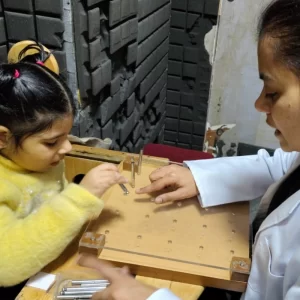
At Reforming Lives, our dedicated Speech Therapy programme is one of the cornerstones of what we do. Led by a qualified, experienced team under the guidance of Dr. Subodh Kumar [PT] — MPT Neurology, BPT from Jamia Hamdard, and Certified in Sensory Integration/NDT — we offer a warm, child-friendly therapy environment where children feel safe to try.
Here is how our comprehensive approach supports children with speech delay:
🟢 Speech and Language Therapy
Our speech therapists conduct a thorough assessment of your child’s speech, language, and communication profile. They then design a personalised therapy plan targeting your child’s specific areas of difficulty — whether that’s producing sounds, building vocabulary, understanding instructions, or developing conversational skills.
We work on:
- Articulation — helping children produce sounds correctly
- Expressive language — building vocabulary and sentence structure
- Receptive language — understanding what is said to them
- Pragmatic language — using language in social situations
- AAC (Alternative and Augmentative Communication) — for children who need picture cards, signs, or devices to communicate while speech develops
🟢 Language Processing Therapy
Many children with speech delay also struggle with processing and understanding language. Our specialised Language Processing Therapy at Reforming Lives helps children organise and make sense of what they hear, so they can respond and communicate more effectively.
🟢 Oral Motor Therapy
For children whose speech delay is caused by physical difficulties with the muscles of the mouth, tongue, and lips, our therapists use oral motor exercises to build the strength and coordination needed for clear speech.
🟢 Hearing Test and Trial
Since hearing loss is one of the leading causes of speech delay, Reforming Lives offers a Hearing Test and Trial service. This ensures that any hearing-related issues are identified early and addressed before they cause further developmental setbacks.
🟢 Audio Visual Stimulation
Our unique Audio Visual Stimulation therapy helps children improve their listening and visual processing skills through targeted exercises combining sounds and images — creating stronger pathways for language learning.
🟢 Early Intervention Programme
For children under 5, our Early Intervention Therapy programme works alongside speech therapy to support all areas of development in a holistic, coordinated way.
🟢 Sensory Integration Therapy
Some children with speech delay also have sensory processing difficulties that make it hard to focus and engage. Our Sensory Integration Therapy helps calm the nervous system so children are more ready to communicate and learn.
🟢 Pre-Academic School
At our Pre-Academic School within Reforming Lives, children with speech delay learn in a nurturing, inclusive environment designed to support communication development through structured play, social interaction, and guided learning.
How Parents Can Support Speech Development at Home
Your involvement at home is just as important as what happens in the therapy room. Here are practical steps you can take every single day:
- Talk to your child constantly — narrate what you are doing: “Now Mama is cutting vegetables. See, these are carrots. Orange colour!”
- Read picture books together every day — point to images, name them, and encourage your child to point and make sounds
- Get down to their level — make eye contact, smile, and be physically present during interactions
- Respond to every communication attempt — if your child points, name it. If they make a sound, respond to it as if it’s a word
- Reduce screen time — replace passive screen time with active, face-to-face conversation
- Sing nursery rhymes and songs — rhythm and melody are powerful language learning tools
- Ask open questions — instead of “Do you want water?” try “What do you want to drink?”
- Give choices — “Apple or banana?” builds vocabulary while empowering your child
- Don’t rush or finish their sentences — give them time and space to try
- Follow the home programme given by your therapist at Reforming Lives — consistency between centre and home is what creates the fastest progress
Why Professional Speech Therapy at Reforming Lives Makes the Difference
While home strategies are important, they cannot replace the expert assessment and targeted intervention that a qualified speech therapist provides. At Reforming Lives, our therapists:
- Accurately diagnose the type and severity of your child’s speech delay
- Design a personalised, goal-based therapy plan reviewed regularly
- Use evidence-based, child-friendly techniques that make therapy feel like play
- Work in close partnership with parents so you always know what to do at home
- Coordinate with our special educators, occupational therapists, and physiotherapists for a holistic, whole-child approach
We are located at Block I4/23-24-25, Sector 16, Rohini, Delhi — easily accessible from Pitampura, Prashant Vihar, Shalimar Bagh, Mangolpuri, Netaji Subhash Place, Paschim Vihar, and across North and West Delhi.
We have been serving families since July 2016, and in that time, we have seen countless children go from silence to sentences — and watched the relief and joy on their parents’ faces when it happened.
A Note of Hope for Every Parent Reading This
If your toddler is not speaking the way you hoped, please do not let guilt or fear stop you from reaching out. You noticed. You searched. You are reading this right now — and that makes you exactly the parent your child needs.
Speech delay is not a reflection of your love or your parenting. It is simply a signal that your child needs a little extra support in one area — support that qualified, caring professionals are ready and able to provide.
At Reforming Lives, we do not just treat speech delay. We treat whole children. We support whole families. And we do it with the care and commitment that every child in our centre deserves.
Your child has a voice. Let us help them use it.
📞 Call us today to book a consultation:
🏥 Reforming Lives — Children’s Rehabilitation & Therapy Centre 📍 Block I4/23-24-25, Sector 16, Rohini, Delhi 📱 Reception: +91 96540 50205 📱 Office: +91 8130405040 📧 Email: reforminglivesfoundation@gmail.com 🌐 Website: www.reforminglives.in
❓ Frequently Asked Questions (FAQs)
1. Is it normal for a 2-year-old not to talk?
Some variation in speech development is normal, but a child who is not using at least 50 words or combining two words by the age of 2 should be evaluated by a speech therapist. Early assessment helps identify whether the delay needs intervention or whether it is within the range of typical development.
2. What is the difference between speech delay and autism?
Speech delay is one possible symptom of autism, but not all children with speech delay have autism. Autism involves broader challenges in social communication, eye contact, behaviour, and sensory processing — not just delayed talking. A professional evaluation at Reforming Lives can assess the full picture and give you a clearer understanding.
3. Can speech delay be caused by watching too much TV or using mobile phones?
Excessive screen time, especially when it replaces face-to-face conversation and interaction, can contribute to speech delay in young children. Children learn language best through live, responsive human interaction. However, screen time alone is rarely the sole cause — a professional evaluation will identify all contributing factors.
4. How long does speech therapy take to work?
Every child is different. Some children show noticeable improvement within a few months of regular, consistent speech therapy. Others may need longer support, particularly if the delay is associated with an underlying condition. The key factors are starting early, attending sessions regularly, and following the home programme consistently.
5. At what age should I start speech therapy for my child?
Speech therapy can begin as early as 12–18 months if concerns are identified. There is no such thing as starting “too early.” The earlier therapy begins, the greater the benefit, as the brain is most responsive to language learning in the first five years of life.
6. Will my child need speech therapy forever?
Not necessarily. Many children with speech delay who receive early, structured therapy are able to catch up to their peers and no longer require formal speech therapy. The goal at Reforming Lives is always to build your child’s skills to the point where they can communicate confidently and independently.
7. How do I book a speech therapy consultation at Reforming Lives?
You can reach our team easily by calling +91 96540 50205 (Reception) or +91 8130405040 (Office). You can also email us at reforminglivesfoundation@gmail.com or visit www.reforminglives.in to book a visit. We are located at Block I4/23-24-25, Sector 16, Rohini, Delhi, and welcome families from across Delhi NCR.