

Early Signs of Autism in Children: A Complete Guide for Parents
As a parent, you know your child better than anyone else. You notice every smile, every sound, every little milestone. And sometimes, deep in your heart, you feel something is different — your child isn’t responding the way other children do. Maybe they don’t look at you when you call their name. Maybe they prefer to play alone. Maybe they have stopped speaking words they once used to say.
If any of this sounds familiar, you are not alone. Thousands of parents across India feel the same worry every single day. And the most important thing to know is this: noticing early signs of autism in children and acting on them quickly can make a huge difference in your child’s future.
What Is Autism? Understanding It in Simple Words
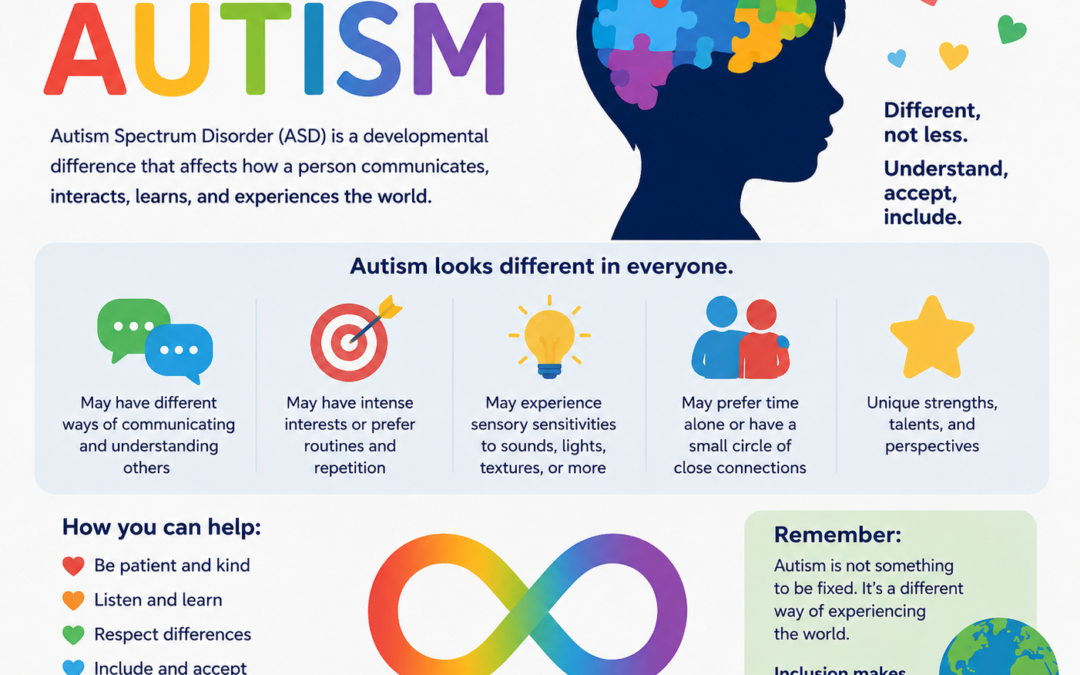
Autism, or Autism Spectrum Disorder (ASD), is a developmental condition that affects how a child communicates, behaves, and interacts with the world around them. It is not a disease, and it is not anyone’s fault. It simply means your child’s brain works and develops differently.
The word “spectrum” is important here. Autism looks different in every child. Some children with autism may be completely non-verbal, while others may speak fluently but struggle to understand emotions or make friends. Some may be highly sensitive to sounds and touch, while others may seem completely unbothered by pain.
Autism is more common than most people think. According to recent studies, approximately 1 in 36 children is diagnosed with autism. In India, awareness is growing — but many children are still going undiagnosed for years because parents and doctors don’t always recognise the early signs in time.
Early Signs of Autism in Children — What to Watch For
The early signs of autism in children can appear as early as 6 to 12 months of age. However, many parents notice something is different between the ages of 18 months to 3 years. The sooner these signs are identified, the sooner your child can get the support they need.
🔴 Social Communication Warning Signs
- Not responding to their name by 12 months of age
- Avoiding eye contact — rarely or never looking at you while talking or playing
- Not pointing at objects to show interest (like pointing at a dog or a toy) by 14 months
- Not waving “bye-bye” or doing other simple gestures
- Delayed speech — not saying single words by 16 months, or not saying two-word phrases by 24 months
- Losing language they once had — a child who was saying words and then suddenly stops
- Not smiling back when you smile at them
- Difficulty understanding what others are feeling
🔴 Behavioural and Sensory Warning Signs
- Repetitive behaviours — flapping hands, spinning in circles, rocking back and forth
- Lining up toys in a specific order and getting very upset if anything is moved
- Strong attachment to routines — extreme distress when routine changes
- Playing with toys in unusual ways — spinning wheels for hours instead of pretend play
- Oversensitivity or undersensitivity to sounds, lights, textures, or smells
- Tip-toe walking without a medical reason
- Fascination with specific objects like fans, lights, or numbers
- Limited pretend play — not playing “make believe” like other children
🔴 Signs in Babies (Under 12 Months)
- Not making eye contact during feeding

- Not babbling or cooing
- Not responding to familiar voices
- Showing little interest in faces or people
Important: Every child develops at their own pace. One or two of these signs alone doesn’t necessarily mean autism. But if you notice multiple signs together, please seek a professional evaluation. Early action is everything.
What Causes Autism? The Truth Parents Deserve to Know
This is one of the most painful questions parents ask — “Did I do something wrong? Is it my fault?”
The answer is an absolute no. Autism is not caused by bad parenting, vaccines, or something you ate during pregnancy. Research shows that autism is caused by a combination of genetic and environmental factors during early brain development.
Here are some factors that research has identified:
- Genetic factors — certain gene mutations, some inherited and some that occur spontaneously
- Advanced parental age at the time of pregnancy
- Premature birth or very low birth weight
- Exposure to certain environmental factors during pregnancy
- Family history — if one child has autism, siblings have a slightly higher chance
What’s most important is that you did not cause this. What you do now — by seeking help early — is what truly matters.
How Autism Affects the Whole Family
Raising a child with autism is a deeply emotional journey. Indian parents often face additional challenges — judgement from extended family, lack of awareness in schools, and a society that doesn’t always understand. Many parents describe feeling isolated, exhausted, and heartbroken — not because of their child, but because of the lack of support around them.
Children with autism often struggle with:
- Making and keeping friends
- Managing sensory overload in noisy or busy places
- Following instructions at school
- Expressing their feelings and needs
- Handling changes in routine
Siblings may feel ignored. Parents may feel guilty for every meltdown they couldn’t prevent. Marriages are tested. Sleep is lost.
But here is the truth that families who have walked this path will tell you: with the right therapy, the right support, and the right people by your side, things genuinely get better. Children improve. Families grow stronger. Hope is real.
Signs Parents Should Not Ignore
Even if your family doctor says “he’ll grow out of it” or your relatives say “all boys speak late” — trust your instincts. These are the signs you should never wait on:
- Your child has stopped using words they previously used
- Your child never makes eye contact
- Your child doesn’t respond to their name at all
- Your child shows no interest in other children
- Your child has violent or extreme meltdowns daily
- You feel in your gut that something is different
Your concern as a parent is valid. Seek a professional opinion. Don’t wait.
Why Early Diagnosis and Therapy Changes Everything

The human brain is most flexible — or what scientists call “neuroplastic” — in the first five years of life. This means that therapy started early has the greatest impact. Early intervention therapy during the ages of 2 to 5 can lead to dramatic improvements in communication, behaviour, and social skills.
Research consistently shows that children who receive early, structured therapy are more likely to:
- Develop functional communication (verbal or otherwise)
- Build independence in daily activities
- Integrate into mainstream classrooms
- Build meaningful relationships with peers and family
- Manage sensory and emotional challenges better
Every month matters. Don’t wait for a “perfect” diagnosis — start as early as possible.
How Reforming Lives Supports Children with Autism
At Reforming Lives in Rohini, Delhi, we understand that every child is unique — and so is every family’s journey. Our centre offers a comprehensive, child-centred approach to autism therapy, with a team of experienced therapists who genuinely care.
Here’s how we help:
🟢 ABA Therapy (Applied Behaviour Analysis)
ABA therapy is one of the most evidence-based therapies for autism. At Reforming Lives, our trained ABA therapists work with your child to build communication, social, and learning skills through structured, positive reinforcement techniques. It is personalised to your child’s specific needs and goals.
🟢 Speech Therapy
Many children with autism face speech and language delays. Our speech therapists work on building functional communication — whether that means spoken words, picture cards, or assistive technology. They work patiently and creatively to help your child find their voice.
🟢 Occupational Therapy
Children with autism often struggle with fine motor skills, self-care tasks like dressing and eating, and sensory regulation. Our occupational therapists at Reforming Lives help children become more independent in daily life and better able to handle sensory challenges.
🟢 Sensory Integration Therapy
Many autistic children are highly sensitive to sensory input. Our sensory integration therapy helps children process sights, sounds, touch, and movement in a more comfortable and functional way — reducing meltdowns and anxiety.
🟢 Early Intervention Programme
For children aged 0–5, our early intervention programme is designed to target the most critical developmental window. The earlier we start, the better the outcomes. We create individual plans that match where your child is and where they can go.
🟢 Special Education
Our special educators work alongside therapists to help children with autism build academic and life skills in a structured, nurturing environment — at a pace that suits them.
🟢 Behavioural Therapy
Managing meltdowns, reducing repetitive behaviours, building routine — our behavioural therapists work with both children and parents to create strategies that make daily life smoother and more joyful.
How Parents Can Help at Home
Therapy doesn’t stop when your child leaves the centre. Here is what you can do every single day:
- Follow the therapist’s home programme — consistency is key
- Create a visual schedule so your child knows what to expect each day
- Use simple, clear language — short sentences, lots of repetition
- Celebrate every small win — a new word, a new eye contact, a smile
- Reduce sensory overload at home — dim lights, soft textures, quiet spaces when needed
- Read picture books together — point to images and name them
- Build turn-taking through simple games
- Connect with other parents — you are not alone, and community is healing
Why Professional Therapy at a Centre Like Reforming Lives Matters
YouTube videos and parenting blogs are helpful, but they cannot replace expert, one-on-one therapy delivered by trained professionals. At Reforming Lives, our therapists assess each child individually, create personalised therapy plans, and track progress over time. We work with your family — not just your child.
We are conveniently located in Rohini, North Delhi, making us easily accessible to families from Pitampura, Shalimar Bagh, Prashant Vihar, Netaji Subhash Place, Punjabi Bagh, and across Delhi NCR.You Are Not Alone — A Message to Every Parent Reading This
If you’ve read this far, you are clearly a devoted, loving parent who wants the best for your child. That love is the most powerful thing in your child’s world.
At Reforming Lives, we have walked this road with hundreds of families. We have seen non-verbal children learn to speak. We have seen children who once couldn’t sit still sit quietly and learn. We have seen parents exhale for the first time in years because they finally found a team they trust.
Your child has potential that is waiting to be unlocked. Don’t let the fear of diagnosis stop you from getting the help that could change your child’s life.
📞 Contact Reforming Lives today. Book a free initial consultation and take the first step towards a brighter future for your child.
📍 Reforming Lives | Special Education & Therapy Centre | Rohini, Delhi
❓ Frequently Asked Questions (FAQs)
1. At what age can autism be diagnosed in children?
Autism can be reliably diagnosed as early as 18 to 24 months of age by a trained developmental paediatrician or child psychologist. Some signs may be visible even earlier, around 6–12 months. If you notice early signs, don’t wait for your child to “grow out of it” — seek an assessment as soon as possible.
2. Can autism be cured completely?
Autism is not a disease that needs to be “cured.” It is a different way of experiencing the world. However, with the right therapies — such as ABA therapy, speech therapy, and occupational therapy — children with autism can make significant progress in communication, behaviour, and independence, and lead fulfilling, meaningful lives.
3. What is the difference between autism and speech delay?
Speech delay is one possible symptom of autism, but not all children with speech delay have autism. Autism involves broader challenges in social communication, behaviour, and sensory processing — not just delayed speech. A professional evaluation at a centre like Reforming Lives can help determine the correct picture.
4. Is autism more common in boys than girls?
Yes, studies show that autism is approximately 4 times more common in boys than in girls. However, autism in girls is often underdiagnosed because girls may mask their symptoms more naturally. If you have concerns about your daughter’s development, please do get her evaluated.
5. How long does autism therapy take to show results?
Every child is different. Some children show noticeable improvement within a few months of starting therapy, while others may take longer. Consistency, early start, and family involvement are the key factors. At Reforming Lives, our therapists regularly track progress and adjust therapy plans to ensure your child is always moving forward.
6. Can a child with autism study in a regular school?
Many children with autism, especially those who receive early and intensive therapy, can be successfully included in mainstream classrooms with the right support. Others may benefit more from special education settings. At Reforming Lives, we help families understand which path is best suited for their child’s unique profile and prepare children for school integration where possible.
7. What should I do if I suspect my child has autism?
The first step is to speak with your child’s paediatrician and ask for a developmental assessment. You can also directly reach out to a specialised therapy centre like Reforming Lives in Rohini, Delhi. Our team will conduct a comprehensive evaluation and guide you on the best next steps for your child. Early action is the most powerful thing you can do.