



Author: Dr. Subodh Kumar, MPT Neurology | Reforming Lives, Rohini Delhi
You know your child better than anyone. So when something feels different — trust that feeling. Many parents notice early signs of autism long before any doctor does. However, they often wait too long before acting on those concerns.
This guide will help you understand exactly what to look for. Moreover, it will tell you precisely when to stop waiting and visit a specialist.
What Is Autism Spectrum Disorder?
Autism Spectrum Disorder (ASD) is a neurodevelopmental condition. It affects how a child communicates, interacts with others, and processes the world around them. Because it presents differently in every child, doctors call it a “spectrum.”
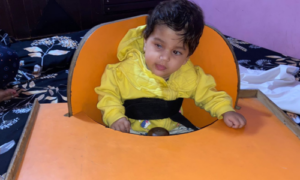
Importantly, autism is not caused by vaccines, food, or parenting style. It has complex neurological roots. Furthermore, it is not a disease — but early therapy does change a child’s life significantly.
Why Acting Early Makes All the Difference
The brain grows fastest during the first three years of life. Therefore, therapy started during this window has the greatest impact. According to the CDC, children who begin early intervention therapy before age 3 make far greater progress than those who start later.
Additionally, you do not need a confirmed diagnosis to begin. If you have a concern, that concern alone is enough reason to act.
Warning Signs by Age — Check Your Child Right Now
Signs to Watch at 6 Months
At 6 months, your baby should smile back at you. They should also react to your voice and make eye contact. However, if your baby rarely smiles, avoids your eyes, or does not respond to sounds — note it. Moreover, monitor these signs closely in the coming months.
Signs to Watch at 9 Months
By 9 months, babies communicate without words. They do this through sounds, facial expressions, and shared looks. Therefore, if your baby does not respond to their name or copy your expressions, mention it to your paediatrician at the next visit.
Signs to Watch at 12 Months
This is a critical checkpoint. By now, most children babble, wave, and point at objects. Furthermore, they respond reliably when called by name. If your child does not point and does not respond to their name, visit a specialist now — do not wait.
Signs to Watch at 16 Months
By 16 months, most children say at least a few meaningful words. Consequently, if your child has no words at all by this age, seek an evaluation immediately. Do not wait until age 2.
Signs to Watch at 24 Months
By 24 months, children combine two words spontaneously — for example, “more milk” or “daddy go.” However, if your child is not doing this — or if they previously spoke and have now stopped — visit a specialist urgently. Regression of any kind always needs immediate attention.
10 Signs That Mean You Should Visit a Doctor
1. Your Child Does Not Respond to Their Name
Call your child’s name when they are not busy. Does your child consistently ignore you? If so, this is not stubbornness. Instead, it is a neurological signal. Therefore, if this happens regularly after 12 months, consult a specialist.
2. Your Child Avoids Eye Contact
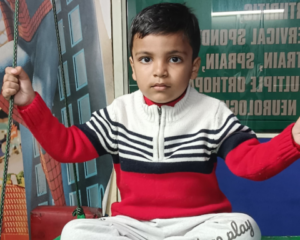
Babies naturally seek out faces and eyes from birth. So when a toddler consistently avoids looking at your eyes during feeding, play, or conversation — it is a significant early indicator. Furthermore, this sign often appears before any speech delay does.
3. Your Child Has Lost Skills They Previously Had
Has your child stopped saying words they used to say? Have they become less social than before? If so, act immediately — this week, not next month. Regression of speech or social skills is one of the most urgent signs of autism.
4. Your Child Does Not Point at Things
By 12 months, children point to share interest — for example, pointing at a dog to show you the dog. However, if your toddler does not point, wave, or use gestures to communicate, this is a clear red flag. Additionally, lack of gestures often predicts later language challenges.
5. Your Child Repeats the Same Movements
Repetitive movements — such as hand flapping, rocking, or spinning — are common in autistic children. These behaviours help children self-regulate their sensory experience. Nevertheless, when these movements are intense and interfere with daily learning, a professional evaluation is needed.
6. Your Child Cannot Handle Changes in Routine
All toddlers enjoy predictability. However, children with autism often become extremely distressed when small routines change. For example, taking a different road, using a different cup, or sitting in a different chair can trigger intense meltdowns. Therefore, if this rigidity is daily and severe, discuss it with a specialist.
7. Your Child Does Not Play Pretend
By 18 months, most children pretend to feed a doll or talk on a toy phone. However, autistic children often skip this kind of imaginative play. Instead, they line up objects, sort by colour, or repeat the same sequence over and over again.
8. Your Child Has Unusual Sensory Reactions
Does your child scream at the sound of a hand dryer? Do they refuse to wear certain fabrics? Alternatively, do they crave extremely rough play or seem to feel little pain? Both over-sensitivity and under-sensitivity to sensory input are common in autism. Consequently, either extreme is worth discussing with a doctor.
9. Your Child Shows Little Interest in Other Children
Some children are naturally shy. However, children with autism show a deeper disengagement — they do not watch other children, do not attempt to join play, and prefer repetitive solo activity. Furthermore, this lack of social curiosity tends to grow more visible as children get older.
10. Your Child Has Only Very Narrow Interests
Many autistic children focus intensely on one or two specific things. For instance, they may watch the same video clip repeatedly or obsess over spinning wheels. Although focus and passion are positive traits, extreme narrowness of interest — combined with distress when interrupted — is worth evaluating.
The Simple Rule Every Parent Should Follow

When in doubt, get it checked. There is no harm in visiting a specialist if your child is developing typically. However, there is real harm in delaying a visit when your child needs support.
Visit a specialist without delay if:
- Your child is not babbling by 12 months
- Your child has no words by 16 months
- Your child has no two-word phrases by 24 months
- Your child has lost any speech or social skill at any age
- Your child does not make eye contact by 6 months
- Your child does not respond to their name by 12 months
- You feel, as a parent, that something is different
What Happens at Your First Visit to Reforming Lives
At Reforming Lives, Rohini Delhi, the first visit is warm, thorough, and completely parent-centred. Dr. Subodh Kumar and our team begin with a full developmental assessment. Based on the findings, we then build a personalised therapy plan for your child.
Depending on your child’s needs, the plan may include:
- ABA Therapy — builds communication and behaviour skills through positive reinforcement
- Speech Therapy — develops language and social communication
- Sensory Integration Therapy — helps your child process their sensory world
- Occupational Therapy — builds daily life skills and independence
- Early Intervention Therapy — the most impactful therapy for children under 3
- IQ & SQ Assessment — gives a detailed picture of your child’s strengths and challenges
Most importantly, you do not need a diagnosis to begin. We accept children from the very first moment a parent has a concern.
About the Author — Dr. Subodh Kumar
Dr. Subodh Kumar is the Managing Director of Reforming Lives. He holds an MPT in Neurology from Jamia Hamdard Delhi and completed his Professional Programme in Early Identification & Intervention for Children with Autism Spectrum Disorder in 2014. Additionally, he contributed to the XIX Commonwealth Games Delhi 2010 medical team. Since 2016, he has led Reforming Lives with one clear mission — giving every special child the earliest, most effective support possible.
Read Dr. Subodh Kumar’s full profile →
What Our Parents Say
“My child came here just 6 months ago and she is tremendously improving. Words cannot describe enough. Thank you so much for this motivation and efforts.” — Shikha Singh, Parent
“Dr. Subodh is the best therapist. He is very humble, polite, and provides on-time guidance. Highly recommended for kids therapies.” — Sheetal Beniwal, Parent
“Reforming Lives is a perfect place for both teaching and learning. Subodh Sir is also an amazing person.” — Payal Chaurasia, Parent
⭐⭐⭐⭐⭐ Rated EXCELLENT — Based on 73 Google Reviews
Frequently Asked Questions
Q: At what age can autism be diagnosed? Autism can often be identified reliably by age 2. However, signs can appear as early as 6 months. Furthermore, many children in India are not diagnosed until school age — which is why early awareness is so important.
Q: Do I need a diagnosis before starting therapy? No. At Reforming Lives, you do not need a diagnosis to begin. Instead, we start with a full assessment and build a therapy plan based on your child’s individual needs.
Q: What is the difference between a speech delay and autism? Speech delay alone does not confirm autism. However, when speech delay combines with limited eye contact, no pointing, and repetitive behaviour, it may suggest autism. Therefore, a specialist evaluation is always the right step.
Q: Can autism affect girls too? Yes, absolutely. Moreover, autism is frequently underdiagnosed in girls because they tend to mask symptoms more naturally. If your daughter shows any signs from this article, she deserves the same evaluation as any child.
Q: How quickly will therapy show results? Results vary by child. However, many families at Reforming Lives report visible progress within the first few months. Furthermore, children who begin earlier consistently show faster and deeper improvement.
Take the First Step Today
If even one or two signs in this article sound familiar — do not wait. Every week of early intervention matters. As a result, the sooner you act, the better your child’s outcomes will be.
+91-8130405040 | Reception: +91-96540 50205 reforminglivesfoundation@gmail.com Block I4/23-24-25, Sector 16, Rohini, Delhi
Book a Free Consultation — www.reforminglives.in
“Every child has the potential to grow and thrive. My mission is to give each child the tools and support they need to unlock that potential.” — Dr. Subodh Kumar, Reforming Lives
Also read: